
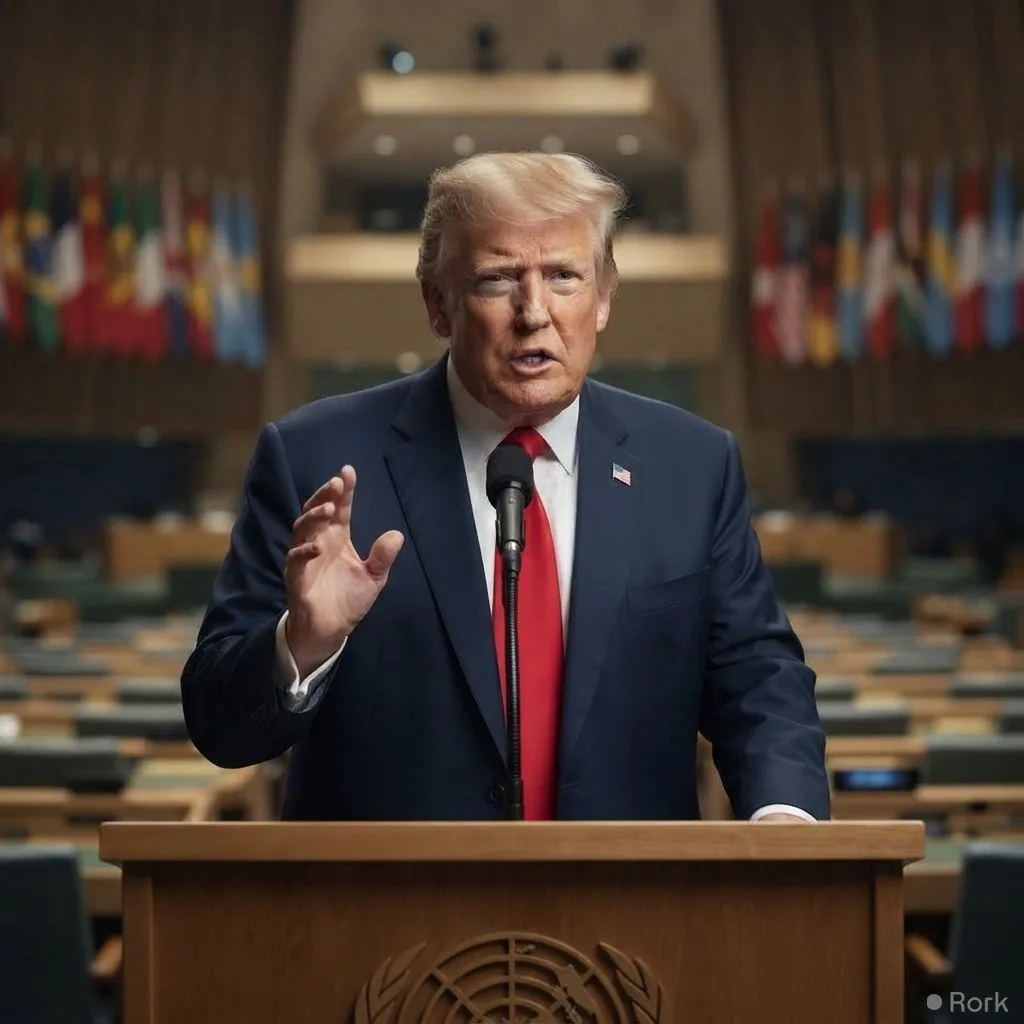
Iranian Foreign Minister Masoud Pezeshkian on Thursday accused U.S. President Donald Trump of adopting a “bullying mentality” and declared that Tehran would not capitulate to any American demands concerning the Strait of Hormuz. The remarks were made during a United Nations General Assembly session in New York, after the United States delegation abruptly left the hall in protest.
Pezeshkian’s speech focused on what he described as a series of coercive moves by Washington aimed at restricting Iran’s navigation rights through the strategic waterway. He warned that Iran would pursue all diplomatic avenues to protect its interests, but would not accept any form of surrender or acquiescence to U.S. pressure.
In response, the American delegation, led by senior officials from the State Department, walked out of the session, signalling a sharp deterioration in the already strained Tehran‑Washington relationship. The United Nations’ official record noted the walk‑out but did not elaborate on the exact procedural trigger for the protest.
The dispute centers on the Strait of Hormuz, through which roughly a fifth of the world’s oil shipments pass. Iran has repeatedly demanded that any security arrangements in the narrow passage guarantee free navigation for all vessels, while the United States has insisted on a naval presence to deter Iranian interference. Pezeshkian reiterated that Iran remains open to a negotiated settlement, but any agreement must address what Tehran sees as unjustified restrictions on its maritime rights.
For Pakistan, the standoff carries immediate economic implications. The country imports more than 40 percent of its oil through the Gulf, and any disruption in Hormuz traffic could spike global crude prices, tightening the fiscal space of an economy already grappling with high inflation. Pakistani policymakers have warned that heightened tensions could affect the cost of fuel and, by extension, transport and agricultural sectors that are vital to everyday consumers.
The current flare‑up follows a series of incidents over the past two years, including the seizure of a commercial tanker by Iranian forces in 2025 and reciprocal U.S. naval drills in the Persian Gulf. While both sides have intermittently engaged in back‑channel talks, the recent public exchange at the UN underscores how fragile the diplomatic bridge remains.
Analysts suggest that the next steps will hinge on whether either side is willing to return to the negotiating table or whether the rhetoric escalates into further naval posturing. Until a mutually acceptable framework is reached, the Strait of Hormuz will likely remain a flashpoint, with ripple effects felt across the broader South Asian region, including Pakistan’s energy market.