
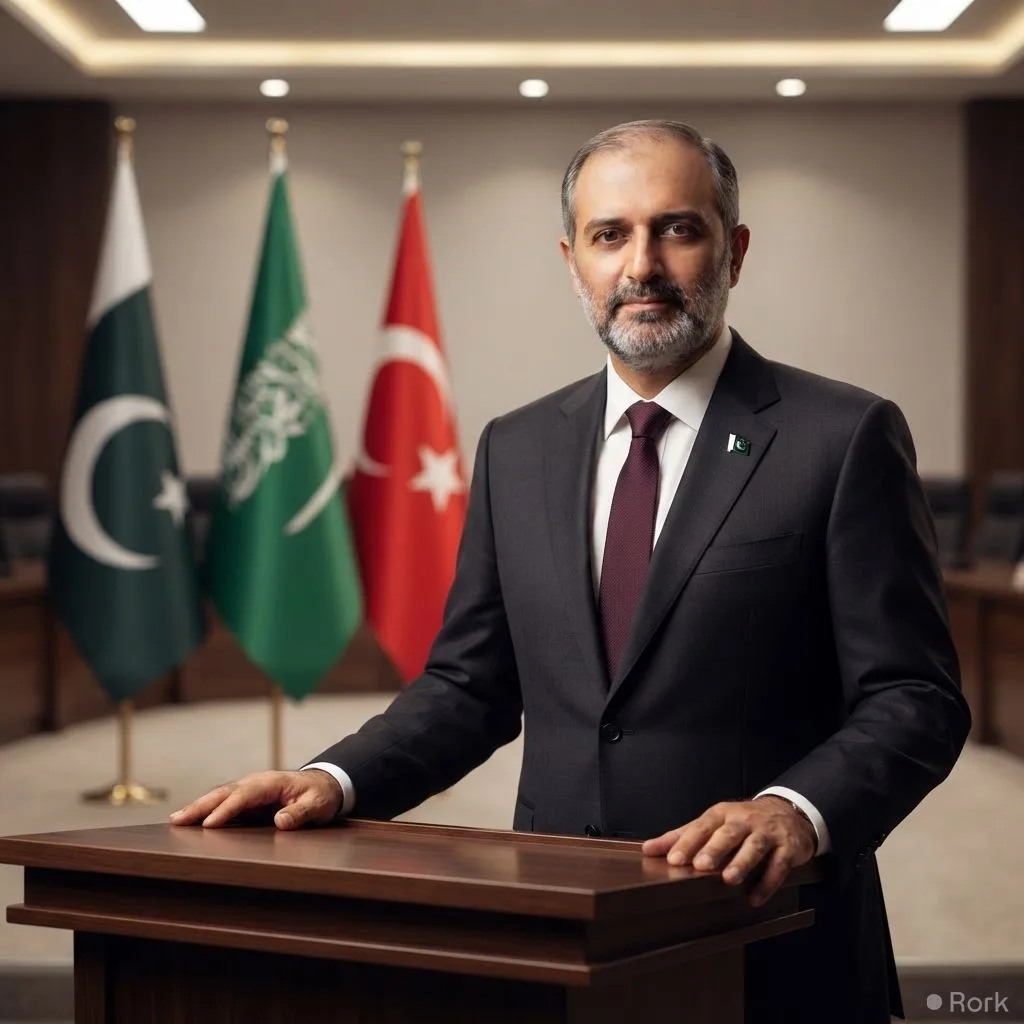
Pakistan’s government has named retired Lieutenant General Nauman Mahmood as the inaugural Secretary General of the newly‑created Makkah Defence Agreement, a trilateral security pact linking Pakistan, Saudi Arabia and Turkey, the announcement said on 24 September 2026.
General Mahmood, who previously served as corps commander of the Pakistan Army’s X Corps and held senior staff positions at the General Headquarters, will head the secretariat that is tasked with coordinating joint operational plans, training exchanges and strategic initiatives under the agreement. The appointment was made by the Ministry of Defence following a high‑level meeting in Riyadh, where the three partners affirmed their commitment to institutionalise cooperation on the protection of Islamic holy sites and broader regional stability.
The Makkah Defence Agreement, signed earlier this year, formalises a framework for collaborative security measures aimed at safeguarding the sanctuaries of Mecca and Medina, as well as enhancing intelligence sharing and maritime patrols in the Red Sea corridor. By appointing a veteran officer with extensive experience in joint operations, the partners hope to move beyond ad‑hoc coordination to a permanent, professional apparatus that can respond swiftly to emerging threats.
For Pakistan, the new role underscores its growing diplomatic and military outreach in the Middle East. Analysts note that the secretariat could open avenues for Pakistani defence firms to participate in joint procurement projects and training programmes, potentially boosting the domestic defence industry. Moreover, the appointment may strengthen Pakistan’s leverage in securing economic assistance and investment from its Gulf allies, who have increasingly looked to Islamabad for security expertise.
Both Saudi Arabia and Turkey have welcomed the decision, emphasizing that General Mahmood’s reputation for operational acumen and his familiarity with the region will help translate the pact’s lofty objectives into concrete actions. Their foreign ministries indicated that the secretariat will convene quarterly ministerial meetings and develop a shared command‑and‑control platform to streamline coordination among the three militaries.
Within Pakistan, the move is being viewed as a diplomatic win that aligns with the country’s broader strategy of deepening ties with key Islamic nations. The Ministry of Foreign Affairs highlighted that the agreement not only contributes to the safety of pilgrims travelling to the Kingdom but also positions Pakistan as a pivotal security partner in the Gulf, a status that could translate into greater geopolitical influence and support in multilateral forums.