
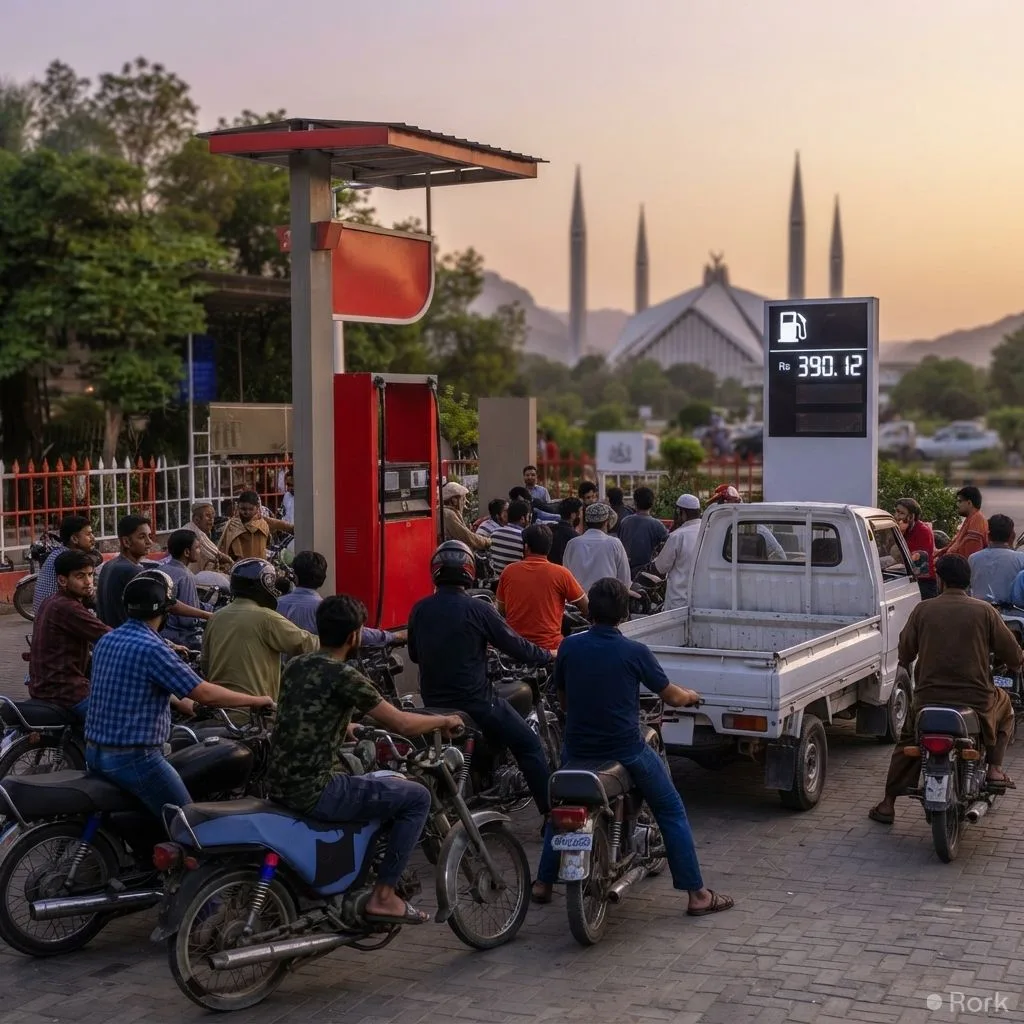
Pakistan’s federal government announced a modest cut to the retail price of petrol, lowering it by Rs 1.93 per litre to Rs 390.12. The new rate takes effect from 24 September 2026, replacing the previous price of Rs 392.05 per litre.
The reduction comes as households and transport operators continue to grapple with the cumulative impact of high inflation, which has squeezed disposable incomes and raised operating costs for buses, trucks and ride‑hailing services across the country. By trimming the pump price, authorities hope to ease the immediate financial burden on daily commuters and commercial fleets that rely heavily on petrol.
In a brief statement, officials from the Ministry of Finance linked the adjustment to the latest movements in international crude‑oil markets. A marginal dip in global benchmark prices allowed the government to pass on modest savings to consumers without altering the overall fuel subsidy framework that has been in place since the start of the fiscal year.
For a typical private‑car driver covering 1,000 kilometres a month, the Rs 1.93 per litre cut translates into roughly Rs 200 in monthly savings, assuming an average consumption of 7 litres per 100 kilometres. Similarly, transport companies operating large fleets can expect a proportional reduction in fuel expenses, which could help mitigate the surge in freight charges that has been passed on to businesses and end‑users.
The price revision is part of a broader package of measures announced by the finance ministry aimed at stabilising the cost of living. Alongside the petrol adjustment, the government has signalled potential relief on electricity tariffs and a review of customs duties on essential imports, seeking to curb the upward pressure on everyday prices.
Analysts note that while the Rs 1.93 reduction is relatively small in absolute terms, it signals the administration’s willingness to respond swiftly to market signals and public concerns. Continued monitoring of crude‑oil trends and inflationary dynamics will determine whether further easing of fuel prices is feasible in the coming months.